Case Study
TextWordCount
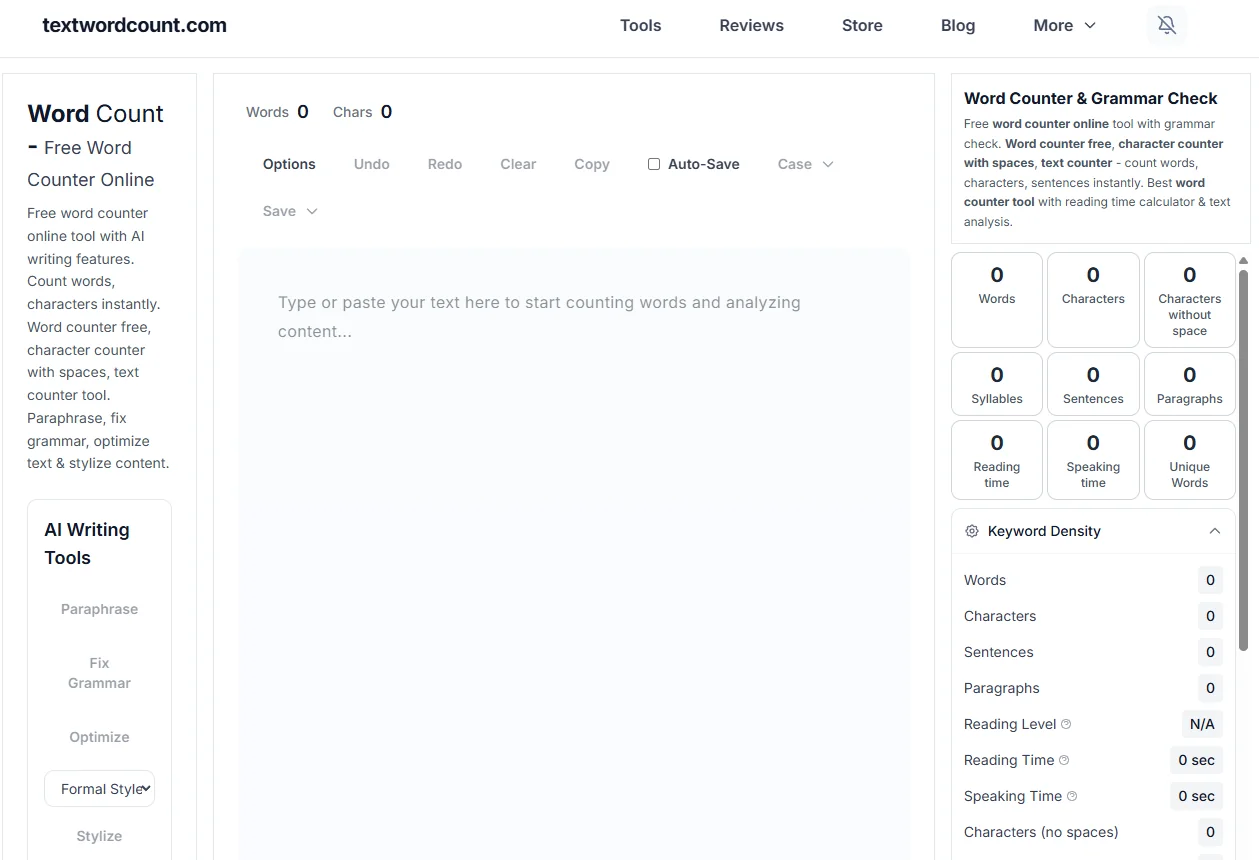
Privacy-first browser-only word counter and text analysis suite.
Tech stack
- Frontend
- Next.js, Tailwind CSS
- Hosting
- Vercel
- Architecture
- 100% browser-side processing — no server reads your text
- Monetization
- 32-language Gumroad digital product storefront
- Schema
- WebApplication, SoftwareApplication
The brief
TextWordCount began as a simple word counter — a utility that every writer needs and that most sites either paywalled or tracked. The privacy angle emerged from a specific pain point: most online text tools send your content to a server to process it, which means your drafts, legal documents, or private writing pass through someone else's infrastructure.
The site was expanded into a multi-tool suite (word count, character count, reading time, keyword density, sentence analysis) while maintaining the core constraint: nothing you paste into the tool ever leaves your browser.
The approach
Applied via the same methodology used across all 18 portfolio sites. Read full methodology →
The privacy-first architecture was the product decision, not an afterthought. By running everything in browser JavaScript, the site could honestly claim "we cannot see your text" — a claim that SEO farms using server-side processing cannot make. This became the primary differentiator in a crowded utility niche.
Monetization was deliberately separated from the free tools: the Gumroad storefront sells language-specific writing guides and productivity packs in 32 languages. This keeps the core tools free and unpaywalled while creating a revenue stream for buyers who want extended resources.
The build
All text processing uses the Web APIs available in every modern browser (string methods, regex, Intl.Segmenter for accurate word boundaries in non-Latin scripts). No backend, no API calls, no logging of inputs.
The 32-language Gumroad storefront was built programmatically — each language variant is a separate product page with localized metadata. This created a long-tail SEO footprint without requiring 32 separate written pages.
The multi-tool suite was built incrementally: word count first, then character count, then reading time (using average words-per-minute rates from reading research), then keyword density. Each tool shares the same processing pipeline.
Privacy was verified by publishing the architecture documentation alongside the tool — a page explaining exactly how the processing works, pointing to the open-source implementation.
Screenshots


Results
- ⏳TODO: organic traffic metrics pending analytics confirmation.
- ✓32 Gumroad product pages live across language variants.
- ✓100% client-side processing — verified by network tab inspection.
What I'd do differently
The privacy claim is only as strong as the documentation behind it. Users are increasingly skeptical of "we don't store your data" claims — the architecture explanation page that shows how client-side processing works was more valuable for trust than any marketing copy.
The 32-language Gumroad approach worked for SEO but required careful metadata management. Programmatic product pages need unique, accurate descriptions per language — generic machine-translated copy does not convert.
HealthCalcPro is a lifestyle tool platform, not a medical authority. See our full medical disclaimer.
Want this approach for your site?
Book a $499 audit at ModernWebSEO and apply the same methodology used across all 18 portfolio sites.