Body Fat Percentage: What It Is, Healthy Ranges, and How to Measure It
Body fat percentage tells you far more about your health than the number on the scale. Here is everything you need to know — including how to measure it, what healthy looks like, and how to actually change it.
Medical Disclaimer
This guide is for informational purposes only and should not replace professional medical advice. Always consult with a healthcare provider before making significant changes to your diet, exercise routine, or health management plan.
Consider two people who each weigh exactly 75 kilograms. The first lost 15 pounds over six months through extreme calorie restriction alone. She is lighter, but she still feels soft, her clothes don't fit the way she hoped, and her strength has noticeably declined. The second gained 5 pounds over the same period while following a resistance training program. He weighs more than when he started, but he looks visibly leaner, his waist is smaller, and his energy levels are higher than they have been in years. How is that possible? The answer is body composition: the ratio of fat mass to muscle mass inside the body. The scale captures neither story accurately. Body fat percentage does.
Body fat percentage is the single number that tells you what your weight is actually made of. It separates fat tissue from lean tissue — muscle, bone, organs, and water — and in doing so, gives you far more clinically relevant information than scale weight or BMI alone. This guide explains what body fat percentage means, which ranges are considered healthy for men and women across different ages, how to measure it with and without expensive equipment, why it matters more than BMI in many real-world situations, and exactly how to improve it without sacrificing the muscle you have worked hard to build.
What Is Body Fat Percentage?
Body fat percentage is simply the proportion of your total body weight that comes from fat tissue. The formula is straightforward:
Body fat % = (fat mass ÷ total body weight) × 100
A person weighing 80 kg with 20% body fat carries 16 kg of fat and 64 kg of lean mass. That lean mass includes skeletal muscle, bone, organ tissue, connective tissue, and the water distributed throughout all of these structures. Two people can weigh exactly the same and have dramatically different health profiles depending on how those 80 kilograms are distributed between fat and lean tissue.
Not all body fat is the same. There are three functionally distinct types worth understanding:
- Essential fat is the minimum fat required for normal physiological function. It supports hormone production, vitamin absorption (fat-soluble vitamins A, D, E, and K cannot be absorbed without dietary fat), nerve insulation, organ protection, and cell membrane integrity. The essential fat threshold is approximately 2–5% for men and 10–13% for women. The higher female threshold exists because essential fat in women includes sex-specific deposits that support reproductive function. Falling below essential fat levels causes serious, sometimes irreversible health consequences.
- Subcutaneous fat is stored directly beneath the skin. It serves as an energy reserve, provides thermal insulation, and cushions mechanical impact. Subcutaneous fat distributed in the hips, buttocks, and thighs is metabolically relatively inert and may even confer some cardiovascular protection in women. It is the fat you can pinch.
- Visceral fat is stored deep within the abdominal cavity, surrounding the liver, pancreas, kidneys, and intestines. Unlike subcutaneous fat, visceral fat is metabolically active. It releases inflammatory cytokines, disrupts insulin signalling, and dumps excess free fatty acids directly into the portal circulation feeding the liver. This is the type of fat most strongly associated with metabolic disease, and it cannot be reliably detected by appearance or by most home measurement methods.
Healthy Body Fat Ranges by Age and Sex
Body fat reference ranges are published by organisations including the American College of Sports Medicine (ACSM) and the World Health Organization. The ranges below represent the most widely used clinical benchmarks. Note that “healthy” body fat naturally shifts upward with age — a 60-year-old woman with 30% body fat may be in the same relative health category as a 25-year-old woman with 26% body fat. Context matters when interpreting any single number.
| Category | Women 20–39 | Women 40–59 | Women 60+ | Men 20–39 | Men 40–59 | Men 60+ |
|---|---|---|---|---|---|---|
| Essential Fat | 10–13% | 10–13% | 10–13% | 2–5% | 2–5% | 2–5% |
| Athlete | 14–20% | 14–20% | 14–20% | 6–13% | 6–13% | 6–13% |
| Fitness | 21–24% | 23–26% | 24–27% | 14–17% | 17–20% | 20–22% |
| Healthy | 25–31% | 27–33% | 28–35% | 18–21% | 21–24% | 22–25% |
| Obese | 32%+ | 34%+ | 36%+ | 22%+ | 25%+ | 26%+ |
The athlete category refers to competitive athletes in sports that require low body fat for performance or aesthetics — distance runners, cyclists, gymnasts, and physique competitors. Sustaining body fat at the low end of this range long-term is physiologically demanding and not necessary or appropriate for most people.
The fitness category represents a lean, physically active person who exercises regularly but is not a competitive athlete. This is a realistic and healthy goal for most active adults.
The healthy category is a broad range with low to moderate metabolic risk. Being in this range does not mean you are unhealthy — it means there may be room to improve body composition if that is your goal, but it is not medically urgent.
One important caveat: research consistently shows that people of East and South Asian descent develop metabolic complications (insulin resistance, type 2 diabetes, cardiovascular risk) at lower body fat thresholds than white European populations. A South Asian man with 20% body fat may carry metabolic risk equivalent to a white European man at 25%. If you are of Asian descent, interpret these ranges conservatively and discuss with your doctor.
Visceral Fat vs Subcutaneous Fat: Why Location Changes Everything
Two people can have the same body fat percentage but completely different health risks depending on where that fat is distributed. This is one of the most important and most misunderstood concepts in body composition science.
Subcutaneous fat sits directly under the skin and represents the majority of total body fat in most people. You can pinch it. It accumulates most visibly on the abdomen, hips, thighs, and upper arms. Research shows that subcutaneous fat on the lower body — hips and thighs — is associated with lower cardiovascular risk and may actually play a protective metabolic role. The so-called “pear shape” body distribution, more common in pre-menopausal women, correlates with a better metabolic profile than the “apple shape” characterised by central abdominal fat.
Visceral fat is stored behind the abdominal wall, surrounding the organs in the peritoneal cavity. You cannot pinch it. Unlike subcutaneous fat, visceral adipose tissue behaves more like an endocrine organ: it secretes cytokines including interleukin-6 (IL-6) and tumour necrosis factor-alpha (TNF-α), elevates circulating free fatty acids via lipolysis, and contributes to systemic inflammation and insulin resistance. The portal vein, which carries blood from the gut directly to the liver, runs straight through visceral fat depots — meaning the liver is exposed to a concentrated stream of inflammatory signals and excess fatty acids from visceral fat. This is a key mechanism behind the link between central obesity and non-alcoholic fatty liver disease.
Visceral fat accumulates preferentially in response to a sedentary lifestyle, chronic stress (elevated cortisol promotes visceral deposition), excess alcohol, refined carbohydrate intake, and inadequate sleep. It also responds more favourably to lifestyle intervention than subcutaneous fat — visceral fat is typically the first to decrease with calorie restriction and exercise.
The most practical way to estimate visceral fat at home is waist circumference. The International Diabetes Federation flags elevated visceral fat risk at:
- Waist above 94 cm (37 inches) for men of European descent
- Waist above 80 cm (31.5 inches) for women of European descent
- Waist above 90 cm (35.5 inches) for men of South or East Asian descent
Waist-to-height ratio is an even more discriminating predictor of cardiovascular risk. A ratio below 0.5 — meaning your waist circumference is less than half your height — is associated with low visceral fat risk across most ethnic groups. Measure your waist at the narrowest point between your ribs and hip bones, at the end of a normal exhale, without sucking in.
How to Measure Body Fat Percentage: 6 Methods Explained
No body fat measurement method available outside of a research laboratory is perfectly accurate. All methods estimate body fat indirectly using assumptions about body density, water content, or geometry. Understanding the strengths and limitations of each method helps you choose the right tool for your situation and interpret results correctly.
1. DEXA Scan (Dual-Energy X-Ray Absorptiometry)
DEXA is the clinical gold standard for body composition measurement. The scan passes two low-dose X-ray beams of different energies through your body. Because fat, lean tissue, and bone each absorb X-rays at different rates, the scanner can differentiate between them with high precision. A full scan takes 10–20 minutes and provides not just total body fat percentage but regional breakdowns (arm fat, leg fat, trunk fat, visceral fat area) and bone mineral density. Error rate is approximately plus or minus 1–2 percentage points. Cost runs from $50 to $150 per scan at medical centers, university sports science departments, and an increasing number of private body composition clinics. Radiation exposure is minimal — roughly equivalent to one hour of natural background radiation or a fraction of a chest X-ray.
2. Hydrostatic (Underwater) Weighing
Hydrostatic weighing calculates body density by comparing your weight on land to your weight while fully submerged in water. Fat is less dense than water; lean tissue is denser. The ratio of your land weight to your underwater weight determines body density, which is then converted to body fat percentage using established equations. Accuracy is within 1.5–2.5 percentage points. It requires access to a facility with a submersion tank and is less accessible than other methods, but it remains a rigorous non-radiation option where available.
3. Bod Pod (Air Displacement Plethysmography)
The Bod Pod uses air displacement rather than water to measure body volume. You sit inside a sealed egg-shaped chamber while the device measures how much air your body displaces. Combined with your body weight, this gives body density, from which fat percentage is calculated. Accuracy is comparable to hydrostatic weighing at plus or minus 2–3%. Bod Pod testing is available at some university athletic programs and corporate wellness centers. It is faster and more comfortable than hydrostatic weighing and does not require getting wet.
4. Skinfold Calipers
Skinfold calipers measure the thickness of subcutaneous fat at multiple standardised sites on the body — typically 3 to 7 locations depending on the protocol used (Jackson-Pollock, Durnin-Womersley, and others). The measurements are entered into a formula that estimates total body fat. Accuracy in trained hands is within 3–5 percentage points of DEXA. In untrained hands, the error can be much larger because consistent measurement technique is critical. The caliper itself costs $10–30. Self-measurement with calipers is difficult for some sites (the back, for example), making it easier to have a trained professional perform the test. For trend tracking over time, calipers can be quite useful even if the absolute number is imprecise — as long as the same person measures the same sites the same way each time.
5. Bioelectrical Impedance Analysis (Smart Scales and Handheld Devices)
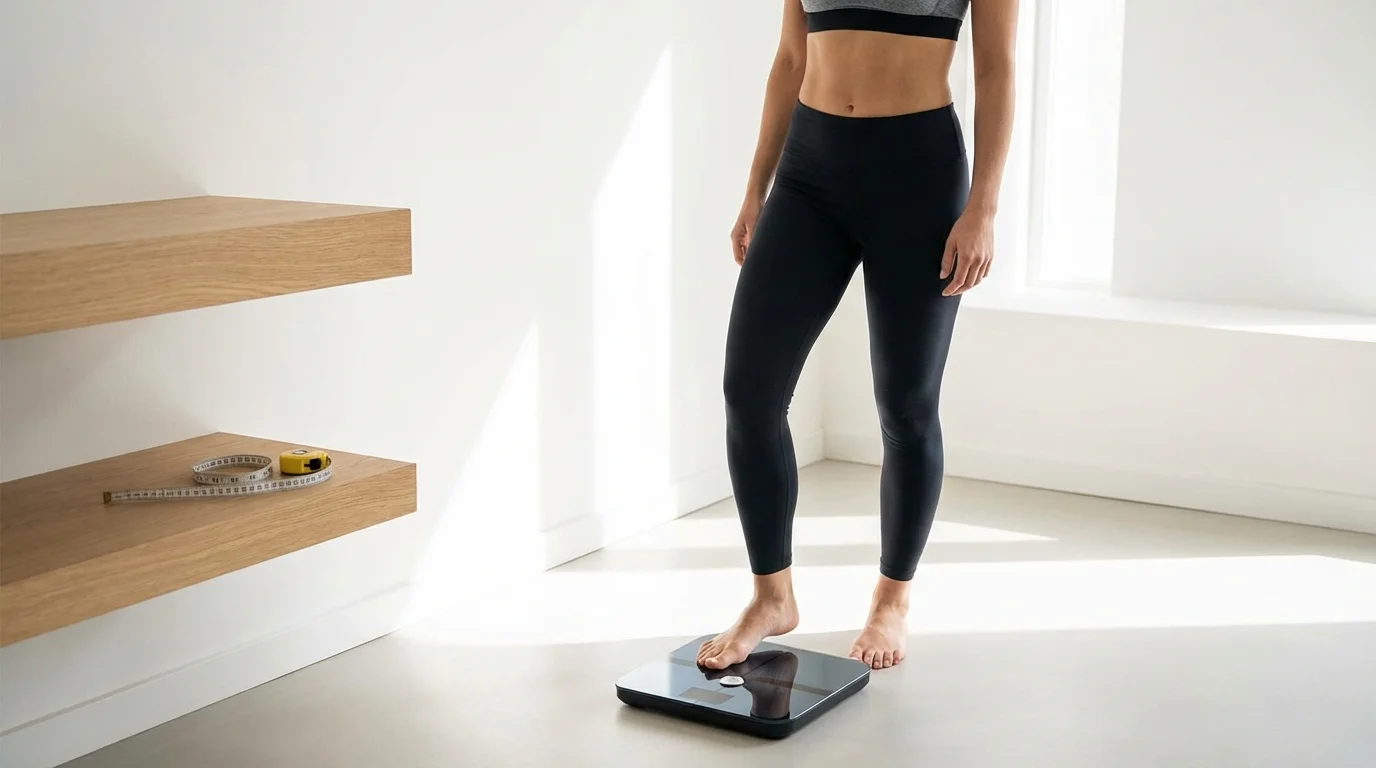
BIA devices send a weak electrical current through the body and measure the resistance (impedance) it encounters. Fat tissue, which contains very little water, resists electrical current strongly. Lean tissue, which is mostly water, conducts current easily. The device uses the measured impedance combined with your height, weight, age, and sex to estimate body fat percentage. Consumer smart scales and handheld devices have an accuracy of approximately 3–5 percentage points under ideal conditions, but real-world variability is higher — readings can shift by 3–7 points based on hydration status, recent food intake, exercise, and ambient temperature. The absolute numbers from BIA are unreliable. Trends measured consistently over weeks and months are genuinely useful.
6. Navy Method (Circumference Measurements)
Developed by the U.S. Navy to assess military fitness using only a tape measure, the Navy Method estimates body fat from waist, neck, hip (women only), and height measurements. The formula applies logarithmic transformations to these circumference measurements and returns a body fat estimate accurate within 3–4 percentage points. It is completely free and requires only a soft measuring tape and two minutes. Our body fat calculator uses the Navy formula so you can get an estimate without doing any arithmetic yourself.
Accuracy Comparison: Which Method Is Best for You?
| Method | Accuracy | Cost | Accessibility |
|---|---|---|---|
| DEXA Scan | ±1–2% | $50–150 | Medical/sports clinics |
| Hydrostatic Weighing | ±2–3% | $30–75 | University labs |
| Bod Pod | ±2–3% | $25–75 | Sports centers |
| Calipers | ±3–5% | $10–30 | Home/gym |
| Smart Scale (BIA) | ±3–5% | $30–200 | Home |
| Navy Method | ±3–4% | Free | Home |
For most people without access to lab equipment, the Navy Method is the most practical starting point: it is free, repeatable, and accurate enough to track meaningful changes. Skinfold calipers offer a good alternative if you are comfortable learning the technique or have access to a trainer who can measure you consistently. Smart scales are best treated as trend-tracking tools, not for interpreting absolute numbers. If you want a precise baseline — for instance, when starting a significant body recomposition program or for medical monitoring — a DEXA scan is worth the cost once or twice a year.
Regardless of which method you choose, the single most important principle is consistency. Always use the same method, the same time of day, the same hydration and fasting conditions, and the same measurer where possible. The comparison between your readings over time is far more valuable than any single absolute number.
Body Fat Percentage vs BMI: When They Tell Different Stories
BMI — body mass index — divides your weight in kilograms by the square of your height in metres. It was developed in the 19th century as a population-level statistical tool and was never designed to assess individual body composition. Yet it became the default health screening metric in clinical settings worldwide, and it fails a meaningful fraction of the people it is applied to.
The fundamental limitation of BMI is that it treats all weight as equivalent. A kilogram of muscle and a kilogram of fat both add equally to your BMI. This creates two categories of systematic misclassification:
Normal BMI, high body fat — sometimes called “normal weight obesity.” A sedentary person who weighs 70 kg and stands 170 cm tall has a BMI of 24.2, comfortably in the “normal” range. But if that person has gradually lost muscle mass over years of inactivity while weight remained stable, their actual body fat might be 30–33%. Studies suggest that between 20 and 30% of people with a normal BMI have excess body fat and carry the associated metabolic risks — elevated triglycerides, insulin resistance, elevated CRP — that their BMI score would suggest they do not have.
High BMI, normal or low body fat. A 90 kg rugby player or powerlifter standing 175 cm has a BMI of 29.4 — technically “overweight.” But if that person carries 55 kg of muscle and 14 kg of fat, their body fat percentage is around 15.5% — firmly in the athletic range. Classifying them as overweight or at cardiovascular risk based on BMI alone is not just inaccurate but potentially harmful if it leads to unnecessary dietary restriction that undermines performance and health.
Neither metric is sufficient alone. BMI is a useful, fast population screen. Body fat percentage is the more meaningful individual measure. Use both: start with BMI as a rough orientation, then use body fat percentage as the more clinically informative follow-up.
How to Reduce Body Fat Without Losing Muscle
Losing fat and losing weight are not the same thing. When you cut calories aggressively without strategic support, your body draws on both fat stores and muscle tissue for energy. This is called muscle catabolism during a deficit, and it results in a lower scale weight but often a worse body composition — less muscle, similar or only modestly reduced fat percentage. The person who lost 15 lbs through extreme restriction alone and still feels soft is experiencing exactly this: she lost weight but degraded her lean mass in the process.
Effective fat loss that preserves muscle requires four simultaneous conditions:
- A moderate calorie deficit: 300–500 kcal per day below your total daily energy expenditure (TDEE). Larger deficits produce faster scale weight loss but disproportionately increase lean mass loss. Research comparing aggressive deficits (1,000+ kcal) to moderate ones (500 kcal) consistently shows that moderate deficits produce better body composition outcomes over 12+ weeks, even when total weight loss is similar. Use our calorie calculator to estimate your TDEE and set your target intake.
- High protein intake: 1.6–2.2 grams per kilogram of body weight per day. Protein is the most muscle-sparing macronutrient during a deficit. Adequate protein intake elevates muscle protein synthesis, reduces muscle protein breakdown, and provides greater satiety per calorie than fat or carbohydrate. People who eat at the higher end of this range during a deficit consistently retain more lean mass. For a 75 kg person, this means 120–165 g of protein daily.
- Resistance training maintained throughout the deficit. The mechanical stimulus of resistance exercise sends a powerful anabolic signal that tells your body to preserve muscle even in a calorie-restricted state. This does not mean you need to lift more weight — maintaining your training frequency, volume, and intensity is sufficient. Dropping to one session per week during a cut, or switching entirely to cardio, removes this protective signal and significantly accelerates lean mass loss.
- Adequate sleep: 7–9 hours per night. Sleep deprivation elevates cortisol, suppresses anabolic growth hormone secretion, and increases appetite hormones (particularly ghrelin). A landmark study published in the Annals of Internal Medicine found that participants on a calorie-restricted diet who slept only 5.5 hours per night lost 60% less fat and 60% more lean mass than those sleeping 8.5 hours on the same calorie intake. Sleep is not optional for body recomposition.
Nutrition Strategies for Fat Loss
The calorie deficit is the non-negotiable foundation, but how you structure your nutrition within that deficit affects how much muscle you retain, how sustainable the deficit feels, and how your energy levels hold up during training.
Prioritise protein at every meal. Centre your meals around a protein source first — chicken breast, fish, eggs, Greek yoghurt, cottage cheese, tofu, legumes — and build the rest of the meal around it. This approach makes it easier to hit protein targets without overthinking macros. Distributing protein evenly across 3–5 meals maximises muscle protein synthesis throughout the day, since there is a ceiling to how much protein a single meal can stimulate for muscle building (roughly 40–50 g per meal for most adults).
Do not slash carbohydrates too aggressively. Carbohydrates are the primary fuel for moderate to high-intensity exercise. Cutting carbs to very low levels while trying to maintain resistance training performance leads to reduced training quality, earlier fatigue, and impaired recovery. A moderate carbohydrate intake (3–5 g per kg of body weight on training days) supports performance better than very low carb approaches for most strength and mixed training styles.
Maintain a minimum fat intake. Dietary fat is essential for hormone production — particularly the sex hormones testosterone and oestrogen. Dropping fat below approximately 0.5 g per kg of body weight can suppress hormone levels, which directly impairs muscle retention and recovery. Include adequate healthy fat sources (olive oil, avocado, nuts, oily fish) even during a cut.
Fill your plate with volume. Non-starchy vegetables are the most calorie efficient way to create satiety during a deficit. Spinach, broccoli, cauliflower, peppers, courgette, cucumber, and leafy greens provide fibre, micronutrients, and substantial food volume for very few calories. Pairing these with lean proteins produces meals that are filling and nutritionally dense without straining your calorie budget.
Avoid liquid calories during the deficit. Juices, smoothies, sports drinks, flavoured coffees, and alcohol bypass the satiety mechanisms that solid food activates. They add calories with minimal effect on hunger. During a fat loss phase, water, black coffee, and unsweetened tea are your most useful beverages.
Exercise That Actually Changes Body Composition
The narrative that cardio is the primary tool for fat loss is one of the most persistent and counterproductive beliefs in popular fitness culture. Cardio burns calories during the session. Resistance training builds muscle tissue that burns calories around the clock. The difference in long-term body composition outcomes is substantial.
Resistance training is the priority. Building and maintaining muscle mass is the most powerful long-term lever for improving body composition. Muscle tissue is metabolically expensive — it elevates your resting metabolic rate, improves insulin sensitivity, and makes fat loss easier to sustain over time. Aim for a minimum of 3 resistance training sessions per week, covering all major muscle groups. Progressive overload — gradually increasing the training stimulus over time by adding weight, reps, or sets — is the mechanism that continues to drive adaptation and prevent muscle atrophy as you age.
Cardio is a useful supplemental tool, not a replacement. Adding 2–3 cardio sessions per week creates additional caloric expenditure that deepens the deficit without requiring further food restriction. Both steady-state cardio (30–60 minutes at moderate intensity) and high-intensity interval training (HIIT) work. HIIT produces comparable fat loss to steady-state in shorter session times and can improve cardiovascular fitness more efficiently, but it is more physically demanding and requires more recovery time. Choose based on what you will consistently do, not what sounds most impressive.
Spot reduction is a myth. You cannot selectively reduce fat in a specific area by training that area more. Doing hundreds of crunches does not cause your body to preferentially burn abdominal fat. Fat is mobilised from all over the body during a calorie deficit, with the distribution determined by genetics and hormones rather than which muscles you train. The path to visible abdominal definition is a low enough total body fat percentage — not an ab-specific training program.
Non-exercise activity thermogenesis (NEAT) adds up. The calories burned through general movement throughout the day — walking, standing, fidgeting, taking stairs — can equal or exceed structured exercise calories for many people. Increasing daily steps, standing while working, and choosing active transport are impactful changes that don't require extra gym time and can meaningfully increase total daily energy expenditure over weeks and months.
How to Track Body Composition Progress
Body fat percentage changes slowly. Sustainable fat loss runs at approximately 0.5–1 percentage point per month. This means that measuring daily or even weekly produces data that is dominated by noise — water fluctuations, glycogen levels, hormonal cycles, digestive contents — rather than genuine changes in fat tissue. Weekly scale weight averages are more signal; monthly body fat measurements are better still.
The most effective tracking strategy uses multiple metrics simultaneously because each tells a different part of the story:
- Body weight (daily, track the weekly average). The daily average smooths out overnight water fluctuations that can swing 1–3 kg between days. A downward weekly average trend over 4–6 weeks is meaningful. A stable weekly average during body recomposition (building muscle while losing fat) is also meaningful — and the scale alone will not reveal it as progress.
- Waist circumference (monthly). A shrinking waist while scale weight is stable or even rising is one of the clearest signals of successful recomposition — losing fat while gaining muscle. Measure at the same point under the same conditions each month.
- Body fat estimate (monthly). Use the Navy Method or calipers with consistent technique. The trend over 3–6 months is more informative than any single reading.
- Training performance. Maintaining or improving strength during a deficit is one of the best indirect signals that you are preserving muscle. If your working weights are declining significantly alongside scale weight, it may indicate you are losing lean mass — a signal to increase protein or reduce the size of the deficit.
- Progress photos (monthly). Taken in consistent lighting, the same time of day, the same clothing and body position, progress photos often reveal visible changes in body composition that measurements lag behind. They are especially useful during recomposition phases when the scale barely moves.
Expect that progress will not be linear. Weight will fluctuate. There will be weeks where every metric stays flat despite full adherence. This is normal physiology, not failure. The pattern across 8–12 weeks is what matters. If after 12 weeks of consistent effort no meaningful trend has emerged in any metric, that is the appropriate time to reassess calorie intake, protein targets, training volume, or sleep quality — not after two difficult weeks in a row.
Frequently Asked Questions
What is a healthy body fat percentage for women?
For women, healthy body fat ranges between 21–33% depending on age. Women aged 20–39 should aim for 21–32%, those aged 40–59 for 23–33%, and women 60 and older for 24–35%. Athletes typically carry 14–20%. Essential fat for women is around 10–13% — going below this can disrupt hormonal function, bone density, and reproductive health. What matters most is where in the range you fall relative to your lifestyle, activity level, and any specific health goals.
What is a healthy body fat percentage for men?
For men, healthy body fat typically falls between 8–19% depending on age. Men aged 20–39 should aim for 8–19%, those aged 40–59 for 11–21%, and men 60 and older for 13–24%. Competitive athletes may be in the 6–13% range. Essential fat for men is 2–5% — below this level, health risks become significant. Most non-athlete men function optimally between 15–22%.
How do I measure body fat percentage at home?
The most practical at-home options are the Navy Method (uses neck, waist, and hip measurements) and bioelectrical impedance scales. The Navy Method is free and reasonably accurate within 3–4%. Smart scales using bioelectrical impedance are convenient but can vary by 3–5% based on hydration. Always measure first thing in the morning under consistent conditions — after using the bathroom and before eating or drinking — for the most reliable tracking over time.
What is the difference between body fat and BMI?
BMI measures weight relative to height and cannot distinguish muscle from fat. Body fat percentage directly measures the proportion of your body that is fat tissue. Two people with the same BMI can have very different body compositions — a muscular athlete and a sedentary person might both have a BMI of 27, but the athlete could have 15% body fat while the sedentary person has 28%. Body fat percentage is the more informative metric for understanding actual health risk and composition.
How quickly can I lose body fat?
Sustainable fat loss runs at 0.5–1% body fat per month. Trying to go faster typically leads to muscle loss, hormonal disruption, and rebound weight gain. A 300–500 calorie daily deficit combined with resistance training 3 times per week is the most evidence-supported approach. On the scale, losing 0.5–1 kg (1–2 lbs) per week is a reasonable pace that generally preserves muscle tissue while reducing fat stores.
Does losing weight automatically reduce body fat percentage?
Not necessarily. If you lose weight through extreme calorie restriction without exercise, you will lose both fat and muscle. This can actually worsen body composition even as the scale drops. The goal is to lose fat while preserving muscle — which requires adequate protein (1.6–2.2 g per kg bodyweight), resistance training maintained throughout the deficit, and a moderate rather than drastic calorie cut. Losing 5 kg of mostly muscle with some fat has worse health implications than losing 5 kg of mostly fat.
What is visceral fat and why does it matter?
Visceral fat is stored around your internal organs inside the abdominal cavity. Unlike subcutaneous fat (the fat you can pinch under your skin), visceral fat is metabolically active — it releases inflammatory compounds that raise the risk of type 2 diabetes, heart disease, and certain cancers. Waist circumference above 102 cm (40 inches) for men and 88 cm (35 inches) for women indicates elevated visceral fat. Visceral fat responds well to lifestyle intervention and is typically the first to decrease with diet and exercise changes.
Can you have a normal BMI but high body fat?
Yes — this is called normal weight obesity and it is more common than most people realise. Studies suggest 20–30% of people with a normal BMI have excess body fat and the associated metabolic risks. This is why measuring body fat percentage rather than relying on BMI alone gives a more complete picture, especially for people who are relatively sedentary despite not being technically overweight by BMI standards. If your BMI is normal but you are sedentary, it is worth checking your body fat percentage.
Body fat percentage is one of the most actionable metrics in health and fitness because it tells you precisely what you are working with and what direction to move in. Whether your goal is to lean out, build strength, or simply understand your health better, start with an honest baseline measurement. Use HealthCalc Pro's free body fat calculator to get your Navy Method estimate in under two minutes — all you need is a tape measure and your height. Then pair it with monthly waist measurements and consistent training to watch your composition shift over time. The number on the scale will tell you one story. Your body fat percentage will tell you the real one.